
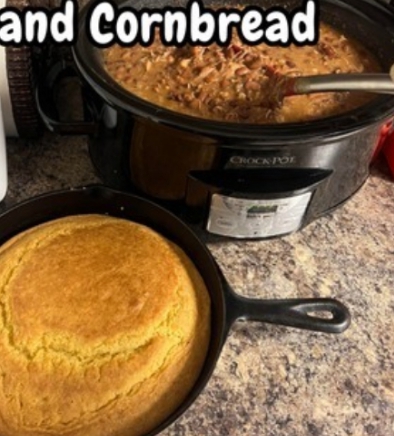

Pinto Beans with Smoked Ham Hocks and Golden Skillet Cornbread
There is perhaps no meal more synonymous with Southern hospitality and “hearty home cooking” than a steaming bowl of slow-cooked pinto beans seasoned with smoked ham hocks, served alongside a wedge of crispy, buttery cornbread. This budget-friendly meal is packed with protein, smoky flavor, and a nostalgia that warms you from the inside out.
Recipe SEO Metadata
Focus Keyword: Pinto Beans with Smoked Ham Hocks
Secondary Keywords: Southern pinto beans recipe, cast iron cornbread, slow-cooked beans, ham hock seasoning, comfort food dinner.
Meta Description: Learn how to make authentic Southern-style pinto beans with smoked ham hocks and crispy skillet cornbread. A detailed, step-by-step guide for the perfect smoky, savory meal.
Part 1: Slow-Cooked Southern Pinto Beans
The secret to the perfect “pot likker” (the flavorful broth) is the combination of a long simmer and the collagen-rich smoked ham hocks.
Ingredients
1 lb Dried pinto beans (picked through and rinsed)
2 Large smoked ham hocks (or 1 meaty ham shank)
1 Large yellow onion, diced
3 cloves Garlic, minced
6-8 cups Chicken broth or water (or a 50/50 mix)
1 tsp Black pepper
1/2 tsp Red pepper flakes (optional, for a tiny kick)
Salt to taste (Add only at the end!)
1 tbsp Bacon grease or olive oil
Instructions
The Soak: Place rinsed beans in a large bowl and cover with 3 inches of water. Soak overnight (8–12 hours) to ensure even cooking and better digestion. Shortcut: Use the “Quick Soak” method by boiling the beans for 2 minutes, then letting them sit covered for 1 hour.
Sauté the Base: In a large Dutch oven or heavy pot, heat the bacon grease over medium heat. Sauté the onion until translucent (about 5 minutes), then add the garlic for 1 minute until fragrant.
Combine: Drain the soaking water from the beans. Add the beans, smoked ham hocks, and black pepper to the pot.
The Simmer: Pour in the broth/water until the beans are covered by about 2 inches of liquid. Bring to a boil, then immediately reduce to a low simmer. Cover with a lid, leaving it slightly ajar.
Wait for the Magic: Simmer for 2 to 3 hours. Check occasionally; if the liquid gets too low, add a splash more broth.
The Finish: Once the beans are tender and the ham is falling off the bone, remove the hocks. Shred the meat, discard the bones/excess fat, and stir the meat back into the pot.
Season: Taste now and add salt. (The ham hocks are salty, so you likely won’t need much!)
Part 2: Golden Skillet Cornbread
A true Southern cornbread is made in a cast-iron skillet to achieve those coveted crispy edges.
Ingredients
2 cups Self-rising cornmeal (yellow or white)
1 Large egg, beaten
1 1/4 cups Buttermilk (the tangier, the better)
1/4 cup Melted butter or bacon grease
2 tbsp Extra bacon grease (for the skillet)
Instructions
Preheat the Skillet: Place 2 tablespoons of bacon grease in a 10-inch cast-iron skillet. Put the skillet in the oven and preheat to 425°F (218°C).
Mix the Batter: In a medium bowl, whisk the cornmeal, egg, buttermilk, and melted butter until just combined. Don’t overmix; a few lumps are fine!
The Sizzle: Once the oven is hot, carefully remove the scorching skillet. Pour the batter into the hot grease—it should sizzle immediately! This creates the “tall” crust.
Bake: Place back in the oven and bake for 20–25 minutes until the top is golden brown and a toothpick comes out clean.
Serve: Slice into wedges while warm and serve with plenty of butter.
Pro-Tips for Success
The “Creamy” Secret: If you want a thicker, creamier broth, use a wooden spoon to mash a half-cup of the beans against the side of the pot during the last 30 minutes of cooking.
No Salt Early: Never salt your beans until they are tender. Salt can toughen the skins of the beans if added too early in the cooking process.
The Pot Matters: A heavy-bottomed pot like a Dutch oven distributes heat more evenly, preventing the beans at the bottom from scorching during the long simmer.
Storage and Reheating
Pinto beans are arguably better the next day! Store in an airtight container for up to 5 days in the fridge. To reheat, add a splash of water or broth to loosen the gravy, as it will thicken significantly when cold.